
Okay, so check this out—browser-extension wallets are convenient. Super convenient. They sit in your toolbar, sign transactions in a click, and let you interact with dApps without juggling seed phrases every minute. But convenience has a cost. Very often that cost is misunderstood or underestimated.
At a glance, an extension wallet looks harmless. It’s a small icon, a friendly modal, a popup that asks you to confirm. But under the hood you’ve got persistent keys, background permissions, and attack surfaces that living inside a browser naturally create. And yeah—my instinct says treat them like a loaded tool: powerful if handled carefully, dangerous if left on autopilot.
Here’s the thing. Extensions run with browser privileges. That means any compromised tab, malicious extension, or targeted script could, in theory, sniff around and cause trouble. Initially I thought most attacks were exotic. But then you read about clipboard hijackers, rogue sites prompting approvals, and phishing overlays that look painfully real. So—serious attention is warranted.
How browser-extension wallets actually work (briefly)
Medium explanation first: they generate or import private keys, store them encrypted locally, and expose a signing API so websites can request transaction signatures. Longer thought: that signing API is a two-edged sword—it’s what enables seamless DeFi UX, but it also creates a consistent interception point for scams and faulty dApp logic.
Most extensions will ask for permissions: access to data on visited sites, read/write to extension storage, and sometimes even tab management. Not all permissions are equal. Some are necessary. Some are not. If a wallet demands broad access that’s not explained in the docs, pause.
Common risks and real-world attack patterns
Short list—fast read.
– Phishing overlays that mimic wallet popups. Scary because they look legit.
– Rogue dApps asking for unlimited token allowances, which then let contracts sweep funds.
– Malicious extensions that piggyback on your wallet’s permissions and siphon signing requests.
On one hand, browser-level sandboxing reduces some risks. On the other hand, browsers are heavily targeted and users run dozens of extensions. So actually the attack chain frequently involves combining small vulnerabilities: a compromised extension plus a clever social-engineering prompt, and boom—your approval gets misused. Hmm… it’s unnerving when you map it out.
Practical defensive habits — quick wins
Do these. Seriously.
– Use a dedicated browser profile for DeFi activity. Keep your everyday browsing separate. It reduces cross-extension risk and accidental clicks.
– Audit approvals regularly. Revoke unlimited allowances unless you have a strong reason. Many wallet UIs make this easy, and many users ignore it until it’s too late.
– Pin only trusted extensions. Remove or disable extensions you don’t use. Fewer moving parts = fewer failure points.
– Keep the wallet extension updated. Updates patch vulnerabilities. It’s basic, but people lag here.
– Consider hardware wallets for large balances. For small daily interactions, an extension might be fine. For anything substantial, a hardware signer is just safer.
Choosing a browser-extension wallet — what to look for
Look beyond the UI. Look at security posture, open-source status, community audits, and the developer track record. Also check whether the wallet provides granular permission controls, transaction previews that show calldata in readable form, and an easy way to connect a hardware wallet fallback.
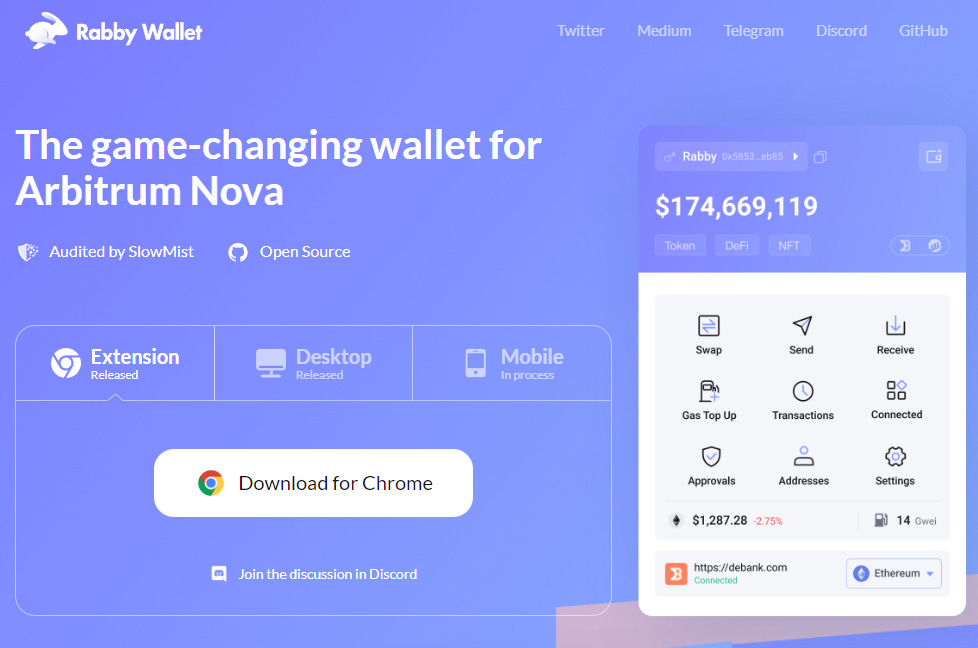
If you want a wallet focused on DeFi UX with more granular controls and safety features, take a look at this download and info page: https://sites.google.com/cryptowalletextensionus.com/rabby-wallet-download/. It highlights options geared toward active DeFi users who need clearer signing dialogues and allowance management.
Workflow recommendations for power users
Workflows help reduce mistakes. Here’s a practical one favored by many traders and active DeFi users:
1) Keep a “hot” account for small, day-to-day interactions; fund it with a limited amount. 2) Keep a “cold” account for significant holdings, ideally on a hardware wallet. 3) Approve only necessary allowances and set spending limits when possible. 4) Use read-only dApp explorers or block explorers to verify contract addresses before interacting.
On another note—use transaction simulation tools where available. They often catch reverts or odd liquidity moves that could indicate a rug pull or exploit in the contract logic. Oh, and by the way, if a dApp pressures you to bypass the simulation step, run away. Seriously.
Dealing with a compromised wallet session
Short and actionable:
– Revoke approvals immediately. Use a reputable token-approval manager to set allowances to zero.
– Move remaining funds from exposed accounts to a secure, fresh account (preferably one behind a hardware wallet).
– Disable and remove suspicious extensions, and reinstall the wallet extension from the official source.
– If private keys or seed phrases were exposed, consider funds lost and treat the account as compromised. Regenerate everything and rotate addresses.
FAQ
Can I trust browser-extension wallets for everyday DeFi use?
Yes, with caveats. For small, frequent interactions they’re fine if you follow basic security hygiene: separate browser profiles, limited allowances, and up-to-date extensions. For larger sums, mix in a hardware wallet or cold storage. I’m biased toward layered defenses—no single tool should be the only guard.
What permissions should make me suspicious?
Any permission that seems unrelated to core wallet function: broad “access to all data on websites” without clear justification, or unexplained background activity. Also watch for wallets that make it hard to inspect what a transaction is actually signing. Transparency matters.
How do I verify I’ve got the real extension?
Download only from official sources: the wallet’s verified website or the browser’s official store, and double-check developer details and reviews. Check the project’s GitHub or documentation for the exact extension ID if you want to be extra sure. If anything smells off—icons that don’t match, odd developer names—don’t install.
